Ancient Indian History — from Sixteen Great Territories to the First Empire
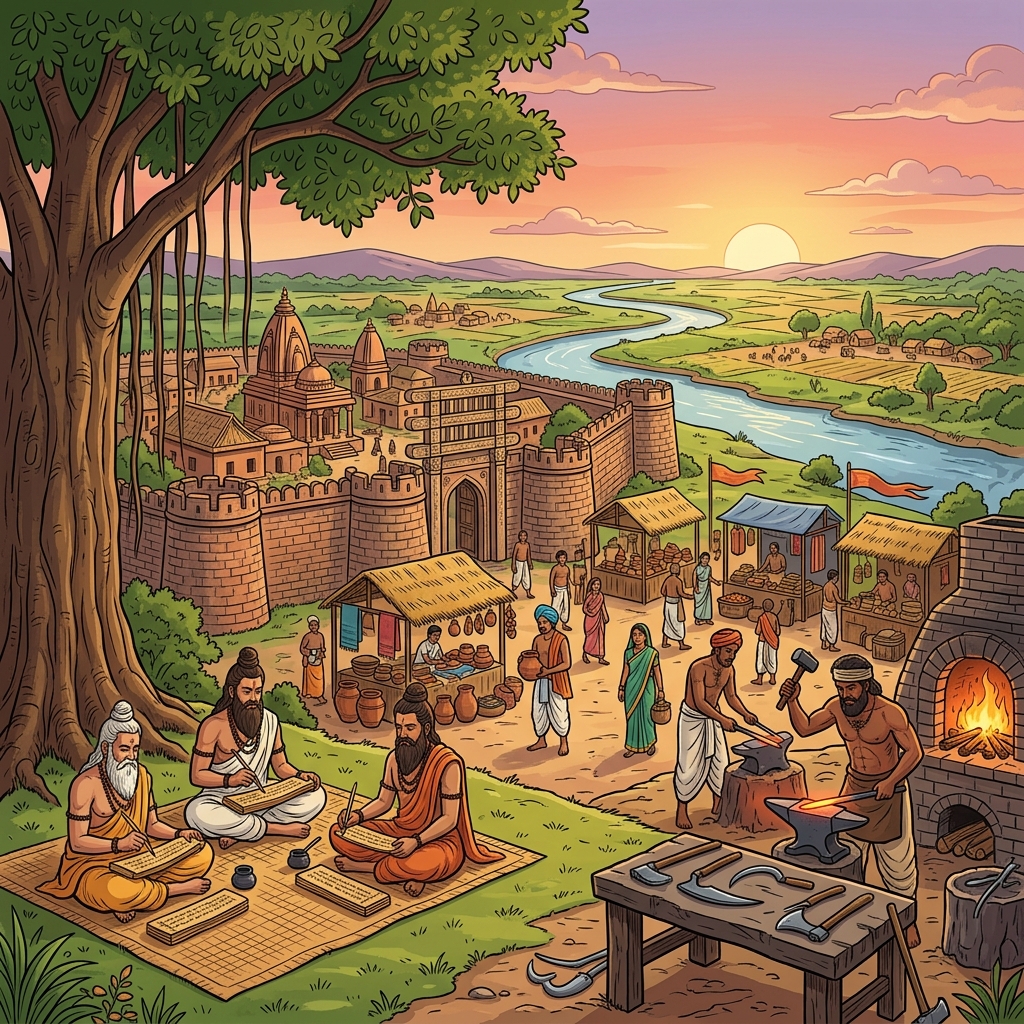
The transition from tribal kinship (Jana) to territorial identity (Janapadas) occurred during the later Vedic Period (1000–600 BCE). By the 6th century BCE, these consolidated into 16 great territorial states known as Sodasha Mahajanapadas.

Northern India was divided into two distinct systems of governance:
| Feature | Monarchies (Kingdoms) | Republics (Gana-Sanghas) |
|---|---|---|
| Location | Predominantly in Gangetic plains (North & Central India). | Foothills of Himalayas and North-Western India. |
| Decision Making | Hereditary king holds supreme power, assisted by ministers. | Collective decision-making by a council (Gana Parishad) via majority vote. |
| Examples | Magadha, Kosala, Vatsa, Avanti, Kashi, Panchala, Kuru, Surasena, Matsya, Anga. | Vajji (eight clans), Malla, Kuru, Kamboja. |
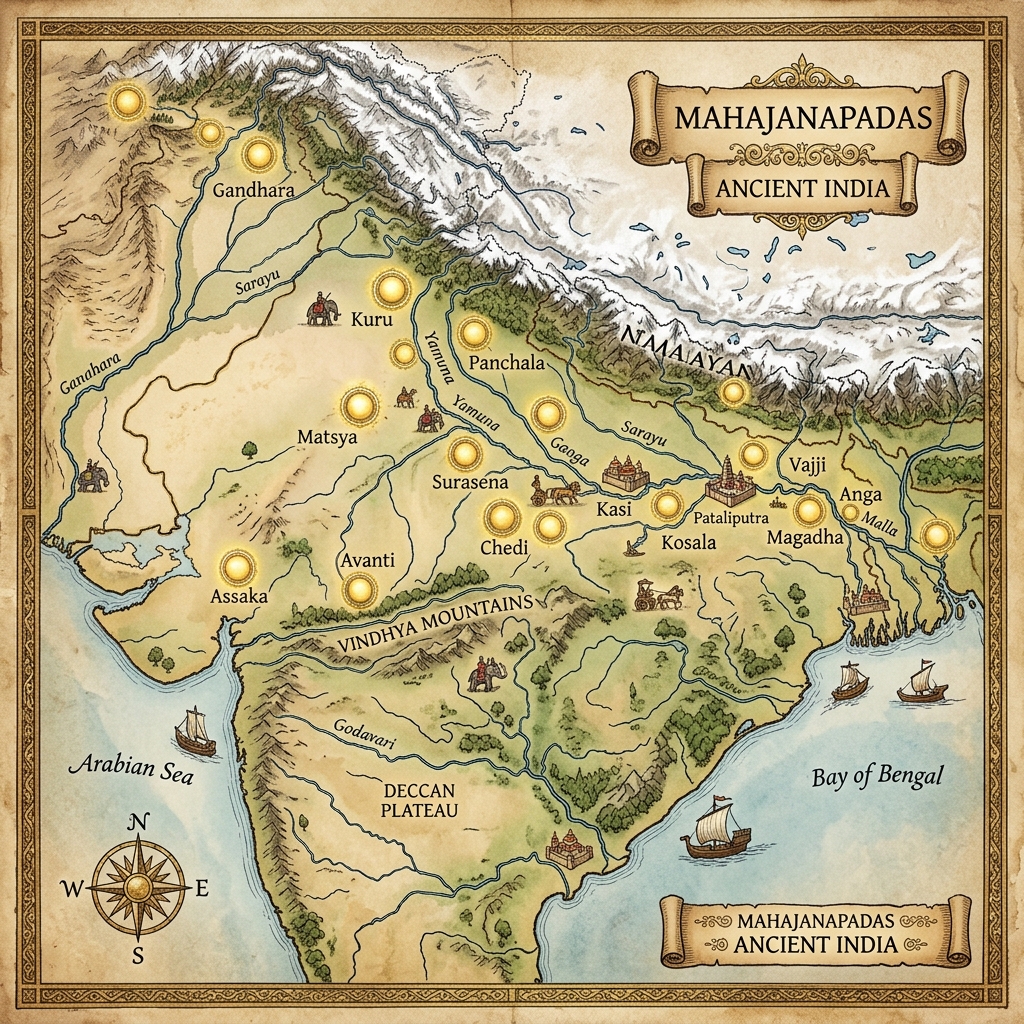
The 16 Mahajanapadas stretched from North-Western Pakistan to East Bihar, and from the Himalayas to the Godavari River.
| Mahajanapada | Capital | River | Key Facts |
|---|---|---|---|
| Anga | Champa | Ganga | Major trade and port city, noted for commerce. Annexed to Magadha by Bimbisara. Located in modern Bhagalpur and Munger (Bihar). |
| Magadha | Rajgriha (Girivraja) / Pataliputra | Ganga & Son | Most powerful. Surrounded by five hills (Rajgir). Pataliputra was a Jaladurga (water-fort). Abundant iron deposits nearby. |
| Kasi | Varanasi | Gomti (at Asi & Varuna confluence) | Major cloth/cotton manufacturing centre and market for horses. Near modern Varanasi. |
| Kosala | Sravasti / Saketa | Sarayu | Birthplace of Lord Rama. Ruled by King Prasenajit. Buddha called himself a Kosalan. Located in Eastern UP. |
| Vajji | Vaishali | Gandak | Confederacy of 8 clans (Lichchhavis, Videha, Jnatrika). Republican governance. Modern Muzaffarpur (Bihar). |
| Malla | Kusinara / Pava | Sarayu / Gandak | Republican state. Site of Buddha's Mahaparinirvana near Kusinara. Located in modern Gorakhpur (UP). |
| Chedi | Suktimati (Sothivati) | Ken & Betwa | Ruled by Shishupala (cousin of Lord Krishna). Located in Bundelkhand (UP). |
| Vatsa | Kaushambi | Ganga / Yamuna | Ruled by King Udayana, known for military strength and love for music. Near modern Allahabad (UP). |
| Kuru | Indraprastha | Yamuna | Site of the Kurukshetra war. Famous for political stability and administrative efficiency. Meerut-Delhi region. |
| Panchala | Ahicchatra (North) / Kampilya (South) | Ganga | Famous centre of Vedic learning and Upanishadic philosophy. Sages Yajnavalkya and Kapila associated here. Western UP. |
| Surasena | Mathura | Yamuna | Associated with Lord Krishna. Located at the junction of Uttarpatha and Dakshinapatha trade routes. Mathura (UP). |
| Matsya | Viratnagar | Yamuna | Ruled by King Virata. Hiding place used by Pandavas during exile. Near Jaipur (Rajasthan). |
| Avanti | Ujjain (North) / Mahishmati (South) | Shipra & Narmada | Ruled by King Chand Pradyota. High-grade iron ore mines enabled advanced weaponry. Malwa region. |
| Gandhara | Taxila | Indus | Famous for Taxila University (world's oldest). Persian and Greek cultural influences. Modern Peshawar (Pakistan). |
| Kamboja | Pooncha / Rajpura (Hataka) | Kabul & Kurram | Known for superior horse breeds and warrior clans. Regarded as "uncultured" by orthodox Brahmanical texts. Near Gandhar. |
| Asmaka | Pratisthan (Paithan) / Potali | Godavari | Only Mahajanapada located in Southern India (modern Maharashtra). |


North-West India (modern Punjab, Gandhara, Kamboja) was highly fragmented and politically unstable during the 6th century BCE, making it vulnerable to foreign invasions.
Impact: Introduction of the Kharosthi Script (right to left, derived from Aramaic); inspired monolithic Persian-style pillars, later influencing Ashoka's pillars; facilitated Indo-Iranian commerce.

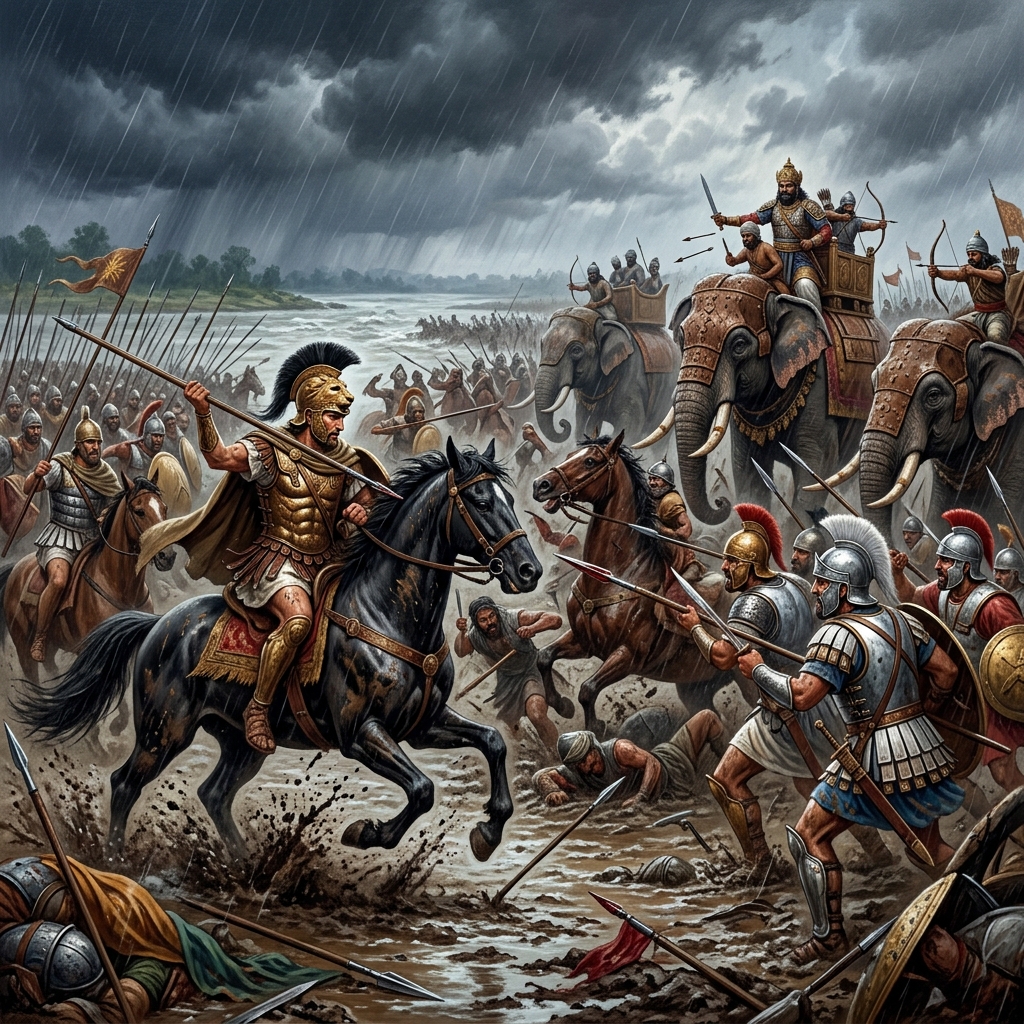
Impact: Opened four trade routes (three by land, one by sea) between India and Europe; established Greek settlements like Alexandria and Boukephala; led to the Gandhara School of Art (cultural synthesis of Greek and Indian styles); weakened small border states, paving the way for Chandragupta Maurya to unify Northern India.
| Topic / Ruler | Most Critical Fact | High Probability Focus |
|---|---|---|
| Oldest Grammar | Ashtadhyayi by Panini (4th–6th century BCE) | Sanskrit Grammar |
| Southernmost State | Asmaka (Capital: Paithan/Pratisthan) on Godavari | Only Southern Mahajanapada |
| Bimbisara | Known as Seniya / Shrenika; first to maintain a standing army | Matrimonial diplomacy |
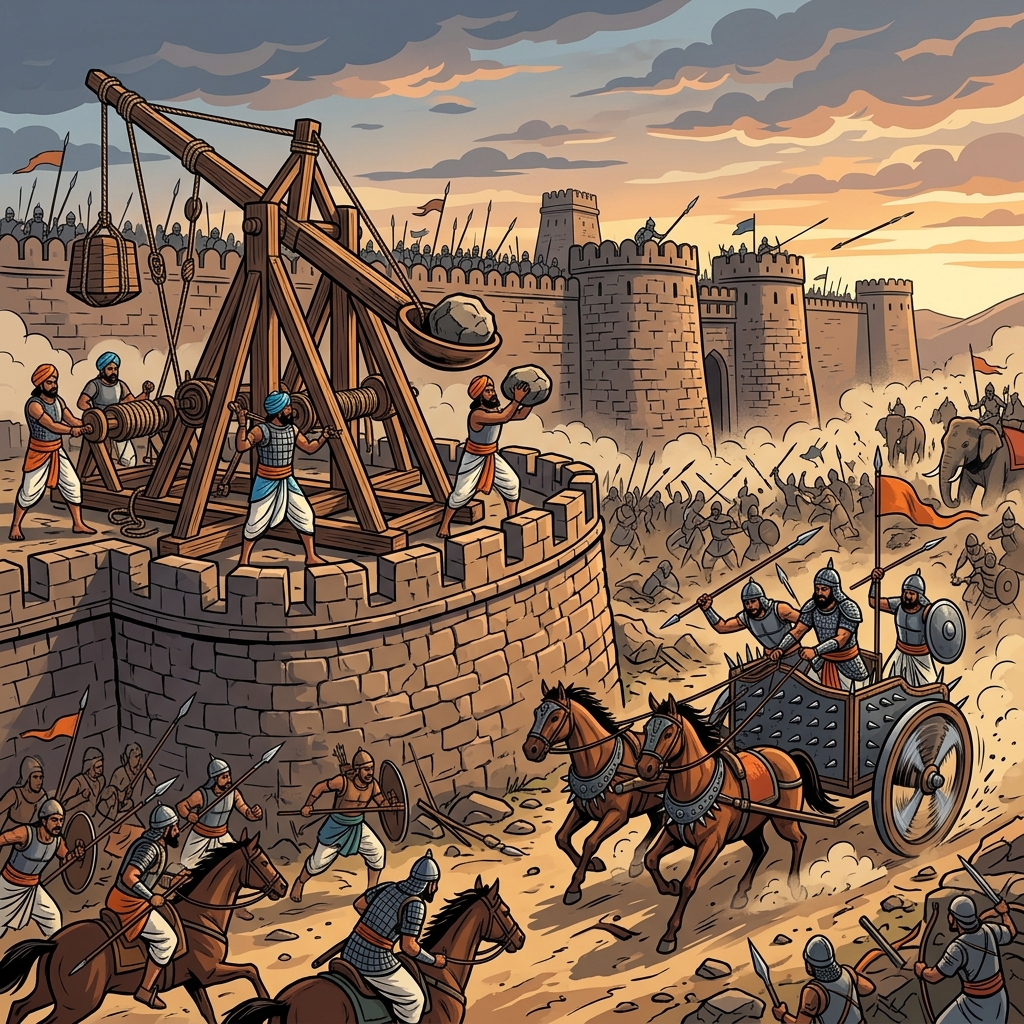
| Ajatshatru | Used Vassakar to split Vajji; used Mahashilakantaka & Rathamusala | First Buddhist Council |
| Udayin | Shifted Magadha's capital to Pataliputra (confluence of Ganga & Son) | Jainism follower |
| Kalasoka | Shifted capital back to Pataliputra; hosted Second Buddhist Council | Vaishali Council |
| Mahapadma Nanda | Known as Ekarat & Sarvakshatrantaka; conquered Kalinga | First non-Kshatriya king |
| Darius I | Annexed North-West India (516 BCE); made it the 20th Satrapy | Tribute: 360 gold talents |
| Battle of Hydaspes | Fought in 326 BCE on the banks of Jhelum between Alexander and Porus | 19-month stay of Alexander |
| Socio-Economy | Land tax: 1/6th (Bhaga); Currency: Silver punch-marked & Gold (Nishka) | Northern Black Polished Ware |
Tap a question to reveal the answer.